Gaganyaan's First Test Flight Is Set For December: India's Robot Astronaut Vyommitra Will Fly First
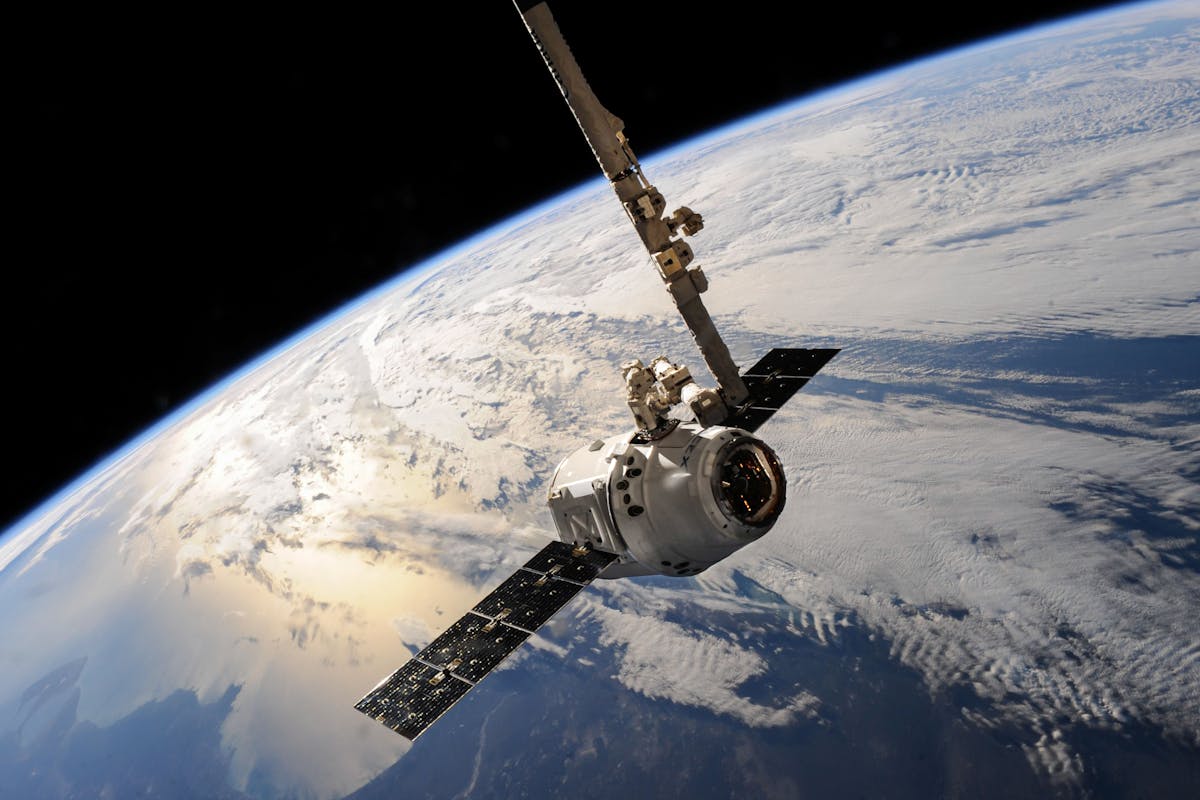
A crew capsule in orbit above Earth. (Photo: Pexels — representative image)
India's wait to send its own astronauts into space is entering its final stretch. ISRO chairman V. Narayanan has confirmed that the first uncrewed test flight of the Gaganyaan programme, called G1, is targeted for December 2026. When it lifts off from Sriharikota, no human will be on board — instead, a half-humanoid robot named Vyommitra will ride in the crew module, testing every system that will one day keep Indian astronauts alive in orbit.
A Robot Flies First
Vyommitra — "Vyom" means space and "Mitra" means friend — is no ordinary passenger. The robot can speak, monitor the crew module, operate switches and alert ground control if something goes wrong. Her job on G1 is to prove that the cabin is safe and comfortable for a human crew before any astronaut climbs aboard.
The flight will launch on the human-rated HLVM3 rocket from the Satish Dhawan Space Centre in Sriharikota, Andhra Pradesh. It is specially upgraded and certified to carry India's first crew.
What G1 Will Test
G1 is a full dress rehearsal of a crewed mission, without the crew. The flight will test the crew module and service module in real orbit, then bring the capsule back through the atmosphere, deploy its parachutes and splash down in the Bay of Bengal. Every one of those steps has to work perfectly — there is no room for error when human lives are at stake.
ISRO has been preparing for this moment for years. Around 7,700 of roughly 10,000 planned qualification tests have been completed, about 77 per cent of the programme, with the remaining work continuing into early 2027. The crew module escape system has already been proven in separate tests, including a successful crew escape demonstration in 2023.
The Road To Indian Astronauts
G1 is only the first of three uncrewed flights — G2 and G3 will follow — before the first crewed mission, known as H1, which is targeted for 2027. That flight plans to carry three astronauts to an orbit about 400 kilometres above Earth for up to three days, then bring them safely home.
If it succeeds, India will become only the fourth country in the world with independent human spaceflight capability, after the United States, Russia and China. Four Indian Air Force officers have already been selected and trained as Gaganauts, and one of them, Group Captain Shubhanshu Shukla, flew to the International Space Station earlier this year on the Axiom-4 mission, giving India its first taste of human spaceflight experience.
A Date, Not A Deadline
It is worth remembering that December is a target, not a fixed launch date. G1 has slipped several times since the programme began, and ISRO has not yet announced an exact day. The schedule is firming up but still depends on the remaining tests going well. For a mission where safety comes first, a careful delay beats a rushed launch every time.
Conclusion
Gaganyaan has moved from a dream on paper to a spacecraft on the launch pad. A robot flying first may sound unusual, but it is exactly how a careful space programme earns the right to fly people. If G1 goes well in December, the countdown to India's first astronauts will finally be real.
Would you watch the G1 launch live if ISRO streams it? Tell us in the comments.


Comments
Post a Comment